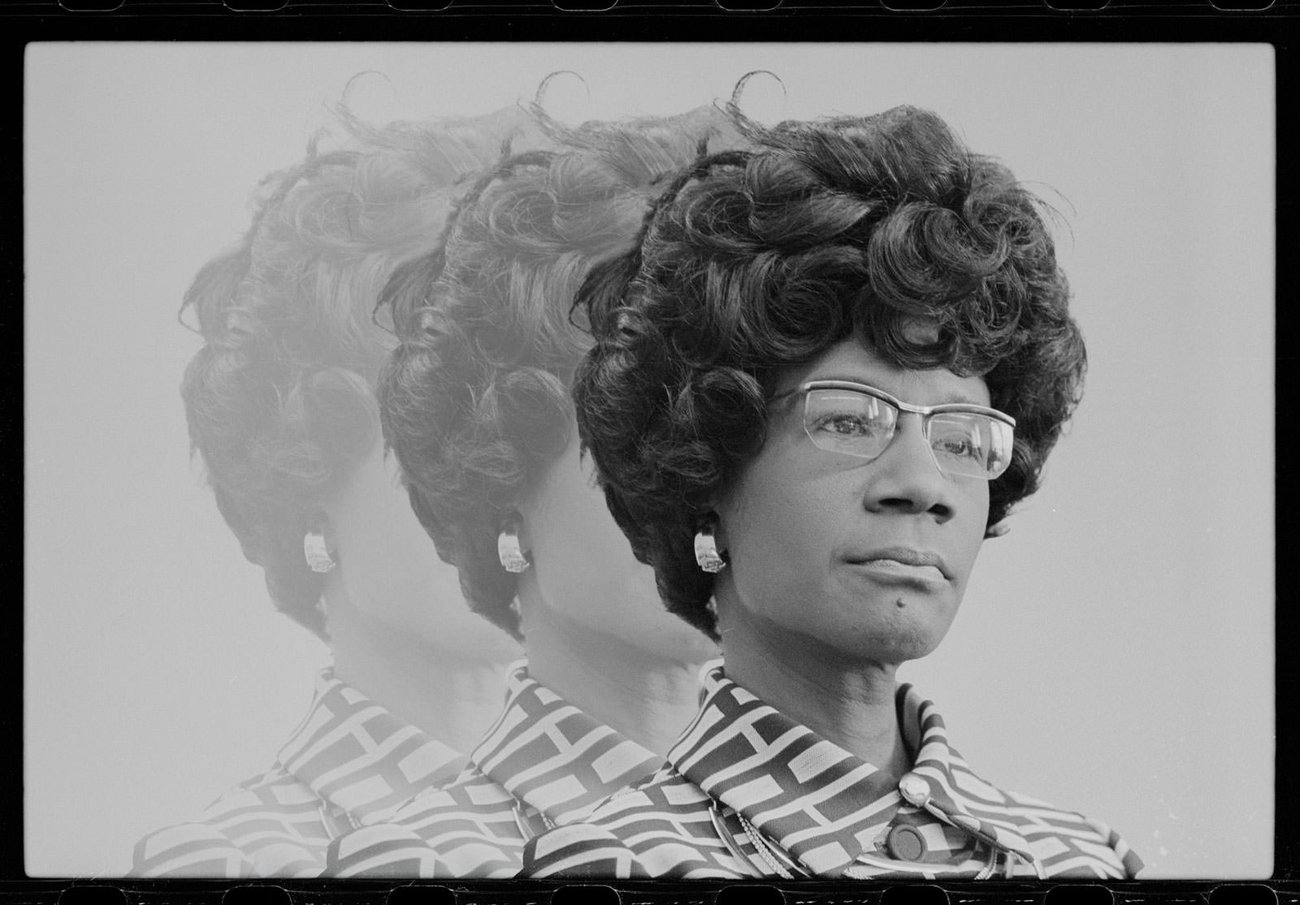
Among the many pertinent storylines in her fascinating oral history, The Movement: How Women's Liberation Transformed America 1963-1973, the journalist and author Clara Bingham chronicles the trials of Shirley Chisholm, the first Black woman to serve in Congress. Chisholm was also the first Black woman to run for president, and her encounters in the public arena foretold much of the degraded discourse and racially tinged dramas of the unfolding 2024 campaign.
In excerpts from Bingham's book published this week in The Washington Spectator, we learn that in Chisholm's early years in politics, first as a candidate and later as a member of the NY State Assembly, she continually faced skepticism and prejudice. "Of the two handicaps, being black is much less of a drawback than being female," she observed with characteristic directness.
In Congress, when she sat at a table in the Congressional dining room, the other members avoided her. A member from South Carolina told her she should kiss the floor because she was getting paid the same as him. Another Southerner wiped her seat after she got up from her chair.
When she challenged the male leadership, she was told she was committing political suicide. In a response that could apply equally to the present day, she commented:
"It is incomprehensible to me, the fear that can affect men in political offices. It is shocking the way they submit to forces they know are wrong and fail to stand up for what they believe. Can their jobs be so important to them, their prestige, their power, their privileges so important that they will cooperate in the degradation of our society just to hang on to those jobs?"
There are also the painful parts to the Chisholm story, such as the strain for example that her decision to run for president placed on her allies in the women's movement. For more on these subplots, and for many other revelations in a narrative brimming with insights into the social movement that has had more impact on modern American life than any other, you can order Clara's book by clickinghere.